
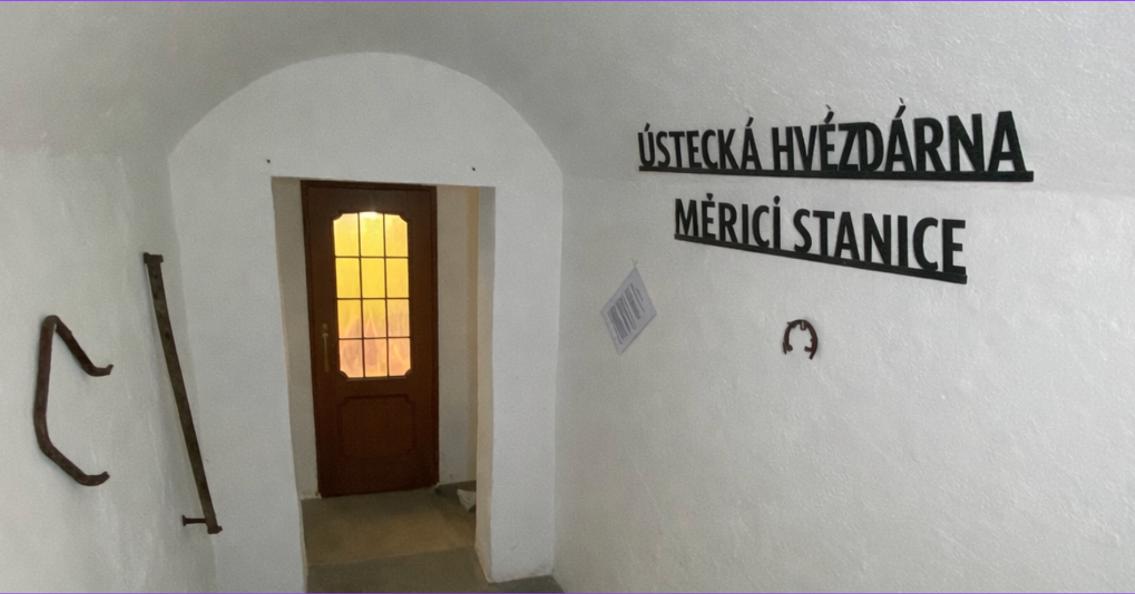
The choice of materials reduced interference with magnetic measurements.
Live data / Ústí nad Labem
Open the weather dashboard →Weather dashboard
Current weather, precipitation outlook, sky conditions, air quality, geomagnetic activity and earthquakes are presented in a dedicated digital observatory.
Archive / since 1930
About the historic Research Station
The live data above relates to the city of Ústí nad Labem. The story below belongs to the original scientific station in Liboňov.
Geophysics / Research Station 1930
The Earth has a signal of its own.
The surviving iron-free cellar was conceived as a separate scientific station. Its stable underground environment enabled magnetic measurements — and it is now being prepared for modern seismology.
Propose a collaboration ↗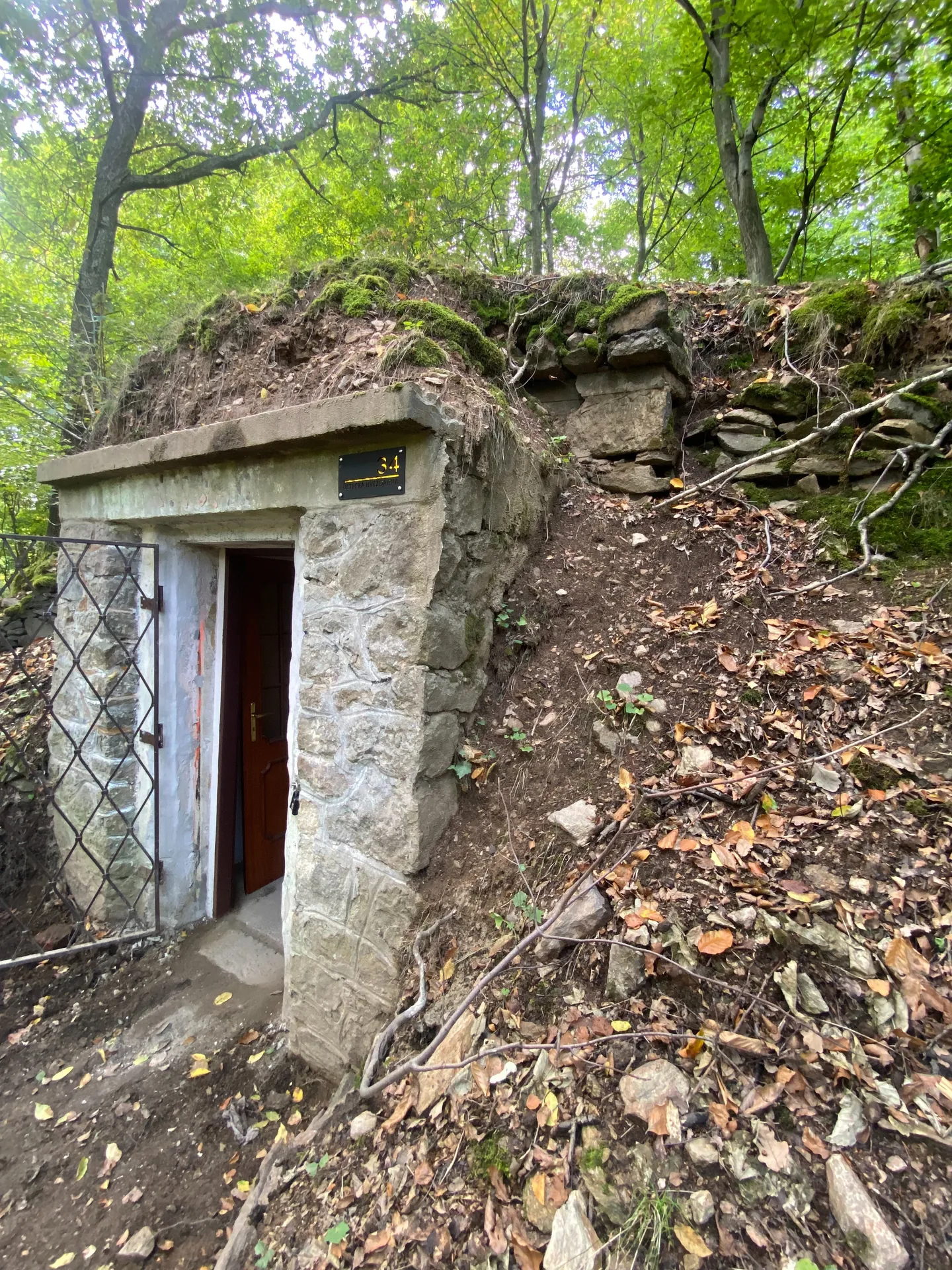
1930year the station was completed
NORTH BOHEMIAN OBSERVATORY / LIBOŇOV
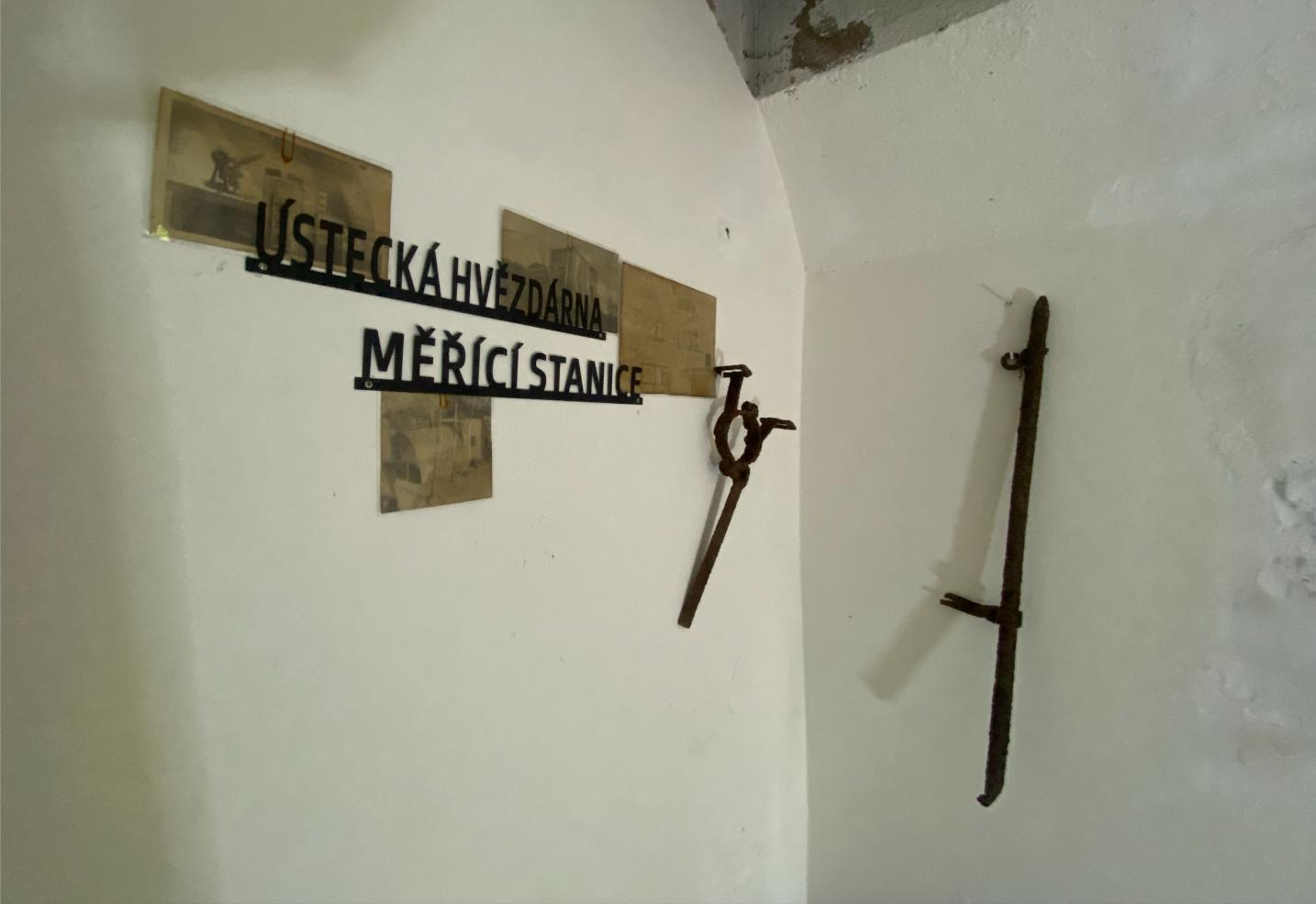
Historic readings of variations in magnetic declination.
A Güralp three-component broadband seismometer. Installation is being prepared; this page does not display a local live signal.
01 / Historic purpose
A cellar that served as a laboratory.
The station was set into the hillside and covered with soil to maintain a stable temperature. The variometer was read through a small window using a telescope, so the observer did not have to enter the measuring room.
According to surviving records, measurements of the Earth’s magnetic field were conducted here during the Second World War for mine-surveying work in the lignite districts below the Ore Mountains. A declination variometer of local design was installed in December 1943.
02 / Restoration 2026
From magnetism to seismology.
In cooperation with the Institute of Rock Structure and Mechanics of the Czech Academy of Sciences, a seismic station is being prepared to record the velocity of ground motion.
The planned Güralp CMG-40T operated near Grindavík in Iceland until 2018. Returning it to service would connect the site’s scientific continuity with today’s international measurement infrastructure.
A place for research institutions and technology projects.
The station is intended for cooperation in geophysics, seismology, instrument testing and the space industry.